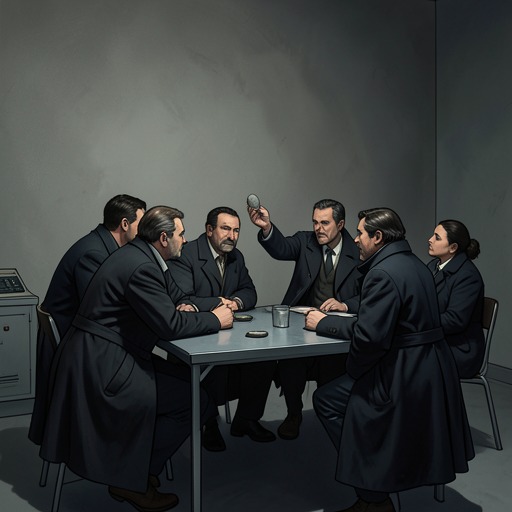
Shani disobeys orders to contact Nella and is forced into a car
The Other Black GirlOn October 20, 2018, Shani Edmonds disobeys Lynn Johnson’s orders and tries to reach Nella Rogers with information that she believes Nella needs. The encounter ends before they meet: while Lynn warns Shani that she is being watched, an unknown person seizes her and pulls her into a car. The scene makes Shani’s decision to act both an ethical break with the Resistance’s instructions and the immediate cause of her exposure to physical danger.
Background and Stakes
Shani’s choice comes after learning more about Kendra Rae Phillips, whose pleading expression has stayed with her. Kendra’s face makes Shani reconsider leaving New York City: she cannot simply return home and write an exposé while Nella risks repeating the fate of other Black women. The choice is not between caring about the story and reporting it. Shani believes she can write without Nella’s account, but Kendra’s condition persuades her that writing alone would leave someone else in danger.
The thought of retreat still has force. Shani remembers owing Lynn and credits her job at Cooper’s with making Boston bearable; without it, she imagines herself shut away in her apartment with a bottle of Jack and a bowl of Reese’s Puffs. Her impulse to go home is therefore tied to a concrete history of isolation, not simply a change of heart about the investigation. Kendra’s distress pulls in the opposite direction, making Shani’s return to the scene an act of responsibility that she knows may cost her the protection of her old life.
Shani also sees something troubling in Kendra that she cannot reduce to age or appearance. Although Kendra still looks great, Shani reads the missing light in her eyes as evidence that something inside her has been altered. She connects that damage to the more than thirty-five years Kendra has spent in hiding. Shani does not need Kendra to name what Diana Gordon did in order to understand, from her face, that her best friend and bestselling author had committed what Shani considers an ultimate betrayal. That recognition gives urgency to Shani’s decision to warn Nella.
Defying the Orders
As Shani turns onto Broadway and works her way through zigzagging tourists, she considers abandoning the meeting. She tells herself she does not need to be a hero, nor does she need Nella’s side of the story to write her exposé; she could go home and disappear from everyone. But she cannot accept watching Nella make the same mistake that other Black girls have made, especially after meeting Kendra. The competing impulses remain visible in the scene: Kendra’s face has kept Shani in New York City, yet the same memory makes her want to flee back to Boston.
Shani had already acted against Lynn’s instructions by texting Nella that morning. Now, near 100th Street, she waits at the edge of a crosswalk as the pedestrian signal’s red hand stops blinking. The pause gives her time to remember Kendra’s pleading look, but it does not settle the danger of proceeding. Shani is afraid that Lynn, too, might one day be turned, and wonders whether she would recognize the change. She nevertheless concludes that she cannot stand aside and let another person suffer; Lynn has already said she does not trust her, but distrust does not make silence acceptable.
Lynn’s Warning
Shani moves to the side of the sidewalk, pressing herself against the glass of a corner store so that she will not block the way. She unbuttons her black trench coat in a futile effort to cool down. Her body registers the pressure before she can make it orderly: sweat gathers between her breasts, and her insides feel as though they are swallowing themselves. She initially thinks she is losing control, then recognizes the feeling as clarity. The physical strain accompanies, rather than cancels, her resolve to contact Nella.
While Shani plans what to say in an article pitch, her phone buzzes. She expects Nella and pulls it out ready to tell her she will arrive soon, but the caller is Lynn. Lynn immediately challenges Shani for trying to meet Nella after the Resistance told her not to. Shani turns around in confusion and asks how Lynn knows. She quickly suspects that Will has informed Lynn, reasoning that he would side with Lynn, whom he regards as blood, rather than with her. Lynn confirms that someone is following Shani, presenting the surveillance as the reason she is fortunate to have received the call.
Lynn orders Shani to go black and says she is on her own. The warning abruptly changes the meeting from a risky personal decision into a crisis of immediate safety. When Lynn shouts that Kenny is around the corner, Shani protests that Lynn cannot leave her there, but the call offers no rescue or reassurance. It instead makes Shani’s exposure unmistakable while giving her only an urgent instruction to disappear.
Abduction and Significance
With no other choice, Shani slips her cell phone into a nearby open garbage can and pivots to run. The phone’s disposal is the one protective action she can take before fleeing; it also cuts off her means of communicating at the moment she needs help. She has not noticed that a car has pulled up. During the call, someone opens its door and approaches on foot, quietly enough that Shani hears neither the click nor the steps.
The attack arrives as touch rather than warning: a firm hand grips Shani’s arm and yanks her hard into the backseat. The scene does not identify the person who takes her, and Lynn’s mention of Kenny does not establish that Kenny is the attacker. It ends with Shani forcibly removed from the street, before she can meet Nella or deliver her intended warning. Her attempt to protect someone else has exposed her to the same hidden violence she fears, making the aborted meeting a sharp reversal: the moment she chooses not to retreat is the moment she loses control of where she is going.